

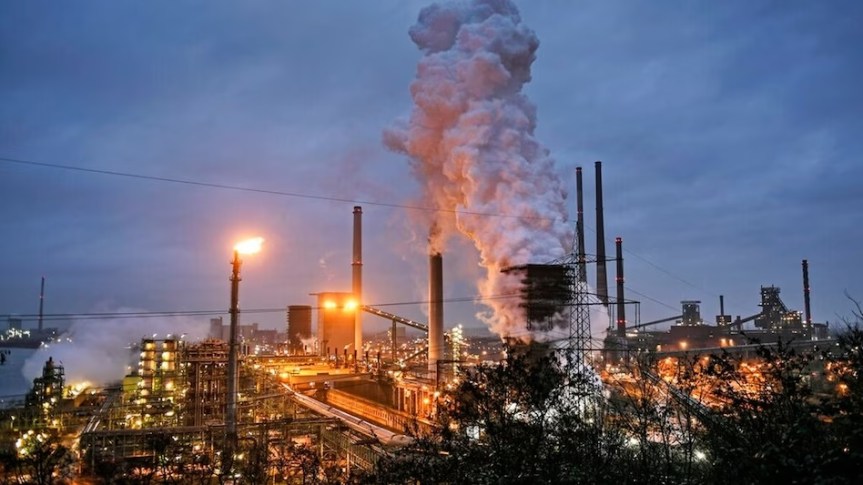
Introduction: Industries as the Backbone of Progress
From the soot-covered smokestacks of the Industrial Revolution to the sleek, intelligent systems of today’s smart factories, industries have served as the lifeblood of global development. They are not merely clusters of production—they are the mechanism through which raw potential is transformed into innovation, jobs, and prosperity. At the heart of every thriving economy lies a diverse industrial foundation, quietly powering the everyday conveniences and monumental achievements of society. As technology advances and global challenges evolve, industries continue to redefine themselves, shaping not just economies but the very way we live and think.
The Evolution of Industry: From Craftsmanship to Automation
The industrial story begins with simplicity. In ancient times, goods were produced by hand, tailored with care but limited in scale. The first real transformation came with the Industrial Revolution in the 18th century, where steam engines, mechanized looms, and coal-fired power plants enabled mass production. This leap in productivity birthed modern capitalism, urban migration, and global trade.
Over time, successive waves of industrialization brought new capabilities. Electricity powered the second wave, automation and computers marked the third, and now, in the fourth industrial era—commonly referred to as Industry 4.0—digitalization, artificial intelligence, and interconnected systems dominate. The evolution of industries is not merely technical; it is a cultural and socioeconomic phenomenon that has fundamentally altered how people work, live, and interact with the world.
Classifying Industries: A Strategic Overview of Sectors
To understand the full spectrum of industrial influence, it is important to examine the primary classifications of industries, based on their roles in the economic chain.
1. Primary Industries
These industries extract and utilize natural resources directly from the earth. They form the base upon which all other industrial activity is built.
-
Agriculture: The cultivation of crops and livestock
-
Mining: Extraction of minerals and fossil fuels
-
Fishing and Aquaculture: Harvesting marine life for consumption
-
Forestry: Harvesting and managing forest resources
2. Secondary Industries
Here, raw materials are transformed into finished or semi-finished products. This sector includes both heavy and light manufacturing.
-
Automobile Production
-
Steel and Cement Manufacturing
-
Construction and Engineering
-
Textile and Apparel Production
Secondary industries are often considered the core of industrialization and national development, as they create tangible, exportable goods and generate large-scale employment.
3. Tertiary Industries
This service-based sector deals not in products, but in experience, knowledge, and logistics.
-
Retail and E-commerce
-
Finance, Insurance, and Real Estate (FIRE)
-
Healthcare and Education Services
-
Hospitality and Tourism
As economies mature, the tertiary sector expands significantly, becoming a key indicator of a country’s socio-economic development.
4. Quaternary and Quinary Industries
These sectors represent the frontier of modern industrial activity.
-
Quaternary Industries: Focused on research, information technology, data analytics, and consulting
-
Quinary Industries: Comprised of top-level executives, policy-makers, and advanced scientific research
These sectors highlight the shift from resource-based industries to knowledge and innovation-driven economies.
The Rise of Industry 4.0: Redefining Production and Productivity
The integration of digital technology into manufacturing processes has sparked the rise of intelligent, adaptive, and self-optimizing industrial systems. Known as Industry 4.0, this paradigm is characterized by:
-
Automation through AI and Robotics
-
Smart Sensors and Real-Time Data Analytics
-
Internet of Things (IoT) for Machine Interconnectivity
-
Cloud Computing and Remote Monitoring
This new industrial era emphasizes precision, flexibility, and sustainability. Businesses are able to customize products, reduce waste, and respond swiftly to market shifts—all while lowering operational costs. For nations, embracing Industry 4.0 is crucial for maintaining competitiveness in the global economy.
Globalization and the Industrial Landscape
Industries have transcended borders. In today’s globalized economy, supply chains stretch across continents. A single smartphone might be designed in the United States, assembled in China, and powered by components from South Korea, Germany, and Japan.
Benefits of globalized industry include:
-
Access to Cheaper Materials and Labor
-
Faster Innovation Cycles
-
Expanded Markets for Products
However, globalization also introduces vulnerabilities such as geopolitical tension, over-reliance on specific suppliers, and environmental degradation. Recent trends suggest a move towards localized or “resilient” supply chains that balance global efficiency with regional stability.
Sustainability and Industry: A Delicate Balancing Act
The industrial boom of the past century has not come without environmental consequences. Carbon emissions, resource depletion, and ecological imbalance are all legacies of unchecked industrial growth. Today’s industries face increasing pressure to align with sustainable development goals.
Modern sustainability strategies include:
-
Green Manufacturing and Use of Renewable Energy
-
Circular Economy Models Encouraging Reuse and Recycling
-
Reduction of Industrial Waste and Emissions
-
Ethical Sourcing and Fair Labor Practices
Consumers, investors, and regulators now favor companies that prioritize environmental stewardship and corporate responsibility. This trend is not just ethical—it’s profitable.
The Human Element: Employment and Skill Development
Industries are among the largest employers in any economy, offering opportunities across a broad spectrum of skills and educational backgrounds. Yet as automation grows, there is an increasing need for human workers to adapt and evolve.
Emerging workforce trends include:
-
Upskilling and Reskilling for Digital Proficiency
-
Greater Emphasis on Creativity and Problem Solving
-
Hybrid Work Models Combining Human Insight with Machine Efficiency
-
Vocational Training and Industry-Academia Partnerships
Education systems must evolve to prepare future generations not just to work in industries—but to lead them.
Industries of the Future: Innovation on the Horizon
The next wave of industrial innovation is poised to transform the way we understand production, commerce, and consumption.
Key developments to watch include:
-
Biotechnology and Genomics in Pharmaceutical Manufacturing
-
Quantum Computing in Industrial R&D
-
Augmented and Virtual Reality in Design and Maintenance
-
Blockchain for Supply Chain Transparency
The industries that embrace change, invest in innovation, and adapt to global expectations will lead the charge into the next industrial age.
Conclusion: The Enduring Significance of Industry
Industries are more than just economic engines—they are the foundation upon which modern society stands. They create wealth, deliver goods, support livelihoods, and enable progress. As challenges such as climate change, automation, and globalization reshape the industrial landscape, it is vital that industries evolve with integrity, intelligence, and inclusivity. In doing so, they will not only sustain economic prosperity but also build a future that is resilient, equitable, and aligned with the highest aspirations of humanity.
 Ledgr Business